
We are living in a rapidly changing digital world. Things are abruptly changing, and we have to follow those changes to move on; otherwise, we will be stuck at some point. We presumably trust middle-paths like banks, lawyers, and technological hulks to certify our data. All the same, these centralized systems are extremely unsafe to cyberattacks, server shortages, and secret fees. This centralized weakness is actually why Blockchain Technology Explained has now become a critical topic of today.
Checking Down the Digital Ledger:
A blockchain is an extremely sophisticated, shared digital ledger. You will be able to think of it as a Hulk Google Doc that is repeated thousands of times over a worldwide network. Every time a fresh transaction happens, it is filed and synced across all these copies. The name itself shows how this data is saved and stored. Dealings are kept together into safe digital “blocks”. When a block is entirely filled, it is permanently attached to the previous block.
Basic Features That Build Up Good Trust:
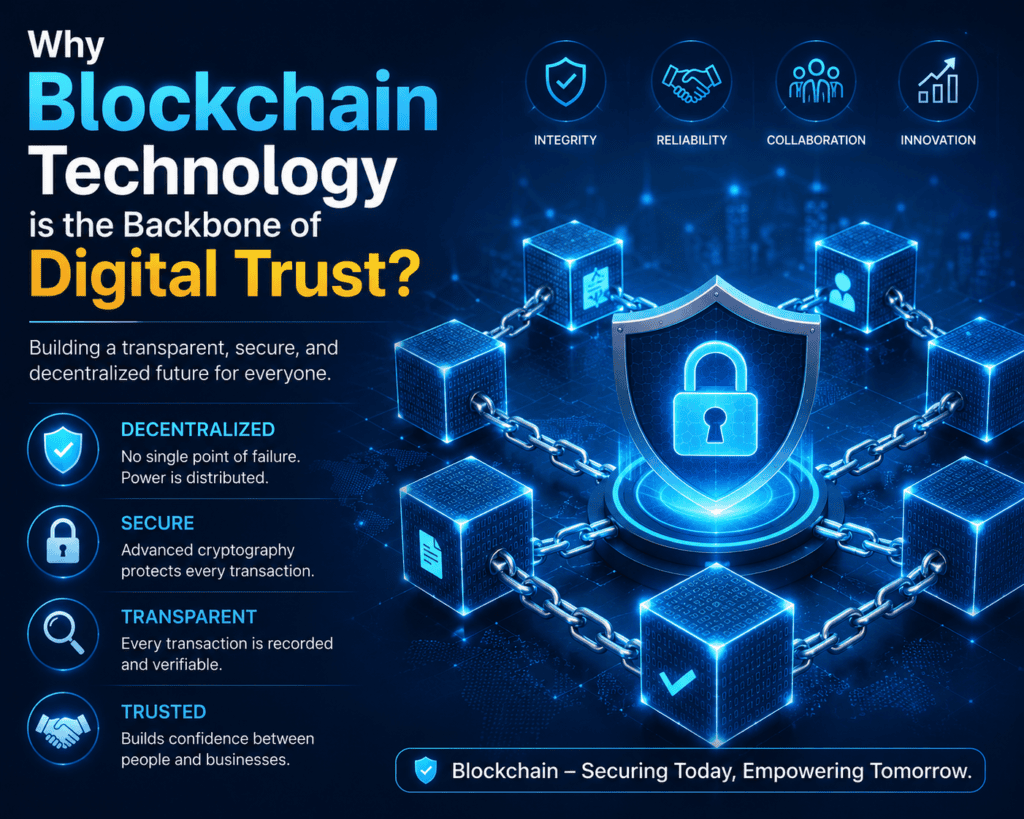
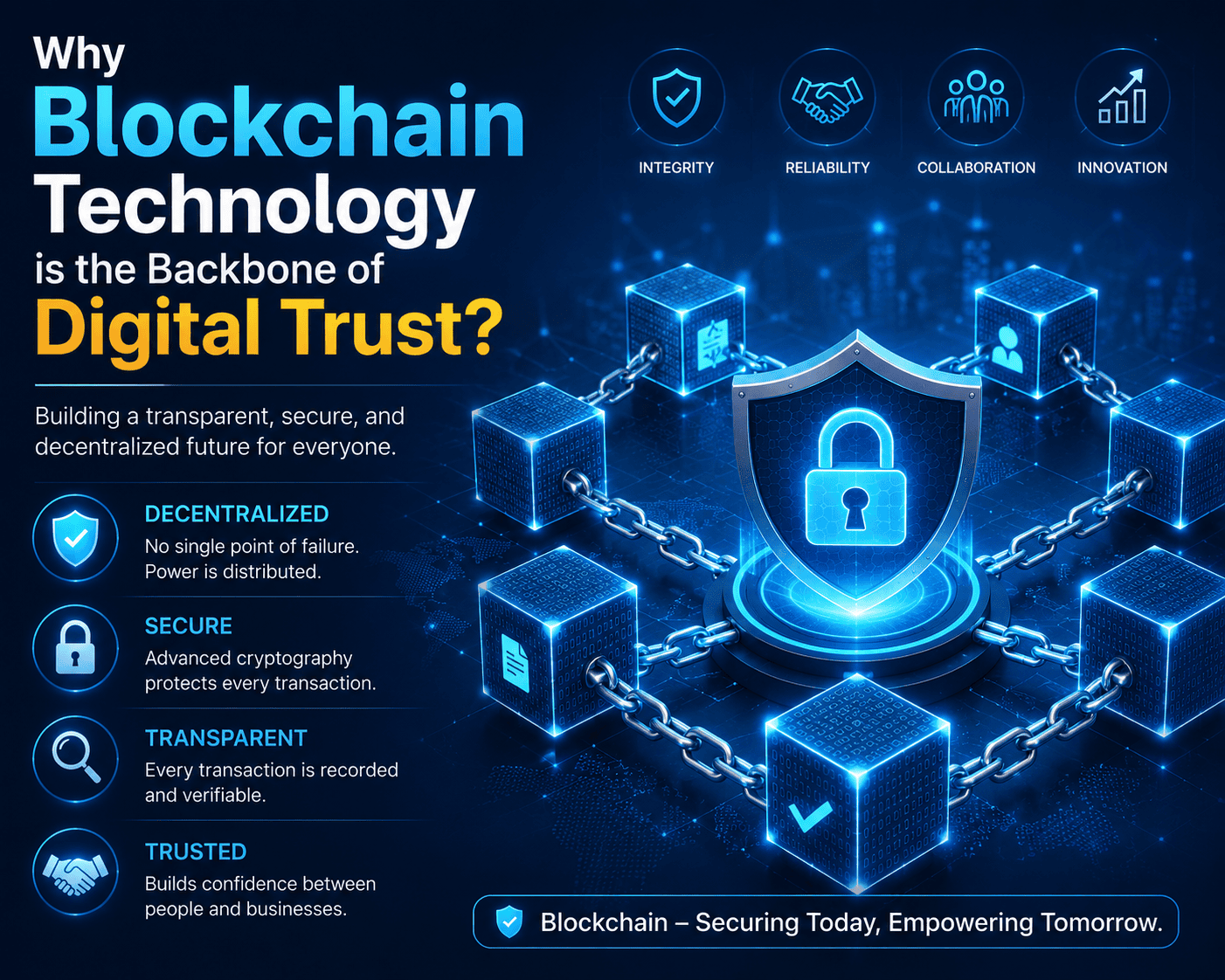
On the contrary, standard corporate databases and blockchains work without a main administrator. This decentralized structure means that no individual or company holds the information. When people go for Blockchain Technology Explained, they are actually seeking how code puts back the human intermediaries.
Just before a fresh block is added up to the chain, the network must know that the deal is valid. These agreement steps are known as consensus. Favorite methods need computers to solve complicated math puzzles or support their personal digital assets. This makes sure that bad performers cannot betray the system or pass the same digital token twice. Platforms like giniä emphasize the importance of secure consensus mechanisms to maintain blockchain integrity and digital trust.
The system attains final digital trust through a lot of solid mechanisms, like:
- Absolute Immutability: When a block is added up, its data cannot be changed or deleted.
- Worldwide Decentralization: Data is immediately saved on thousands of independent computers.
- Radical Transparency: Anyone on the network can easily audit the entire transaction history.
- Modern Cryptography: Complicated mathematical rules safeguard every single data block against forgery.
Real-Life Applications Beyond Cryptocurrency:
Although bitcoin at the start brought out blockchain to the world, its power stretches on the far side of digital money. Advanced enterprises are quickly embracing this technology to solve complicated and difficult logistical and security troubles. An exact understanding of Blockchain Technology Explained shows its ability to revolutionize standard industries.
For example, global supply chains utilize it to check a product’s actual journey from manufacturing to the consumer’s hand. This rapidly proves legitimacy and gets rid of counterfeit goods from the market. In addition, “smart contracts” utilize blockchain to automatically perform lawful agreements when limited conditions are met. Healthcare networks as well use it to securely distribute sensitive patient records between several hospitals without privacy risks.
Final Thoughts:
We are presently transitioning toward a decentralized internet, frequently referred to as Web3. In this latest digital time, users will actually own and bear their personal data and digital identities. The backbone of this immersive technological transition is, undeniably, blockchain technology. By eliminating the need for unwanted middle-paths, it empowers people and aligns global commerce. Finally, taking the time to realize Blockchain Technology Explained is your initiative in navigating the future of safe digital trust.