
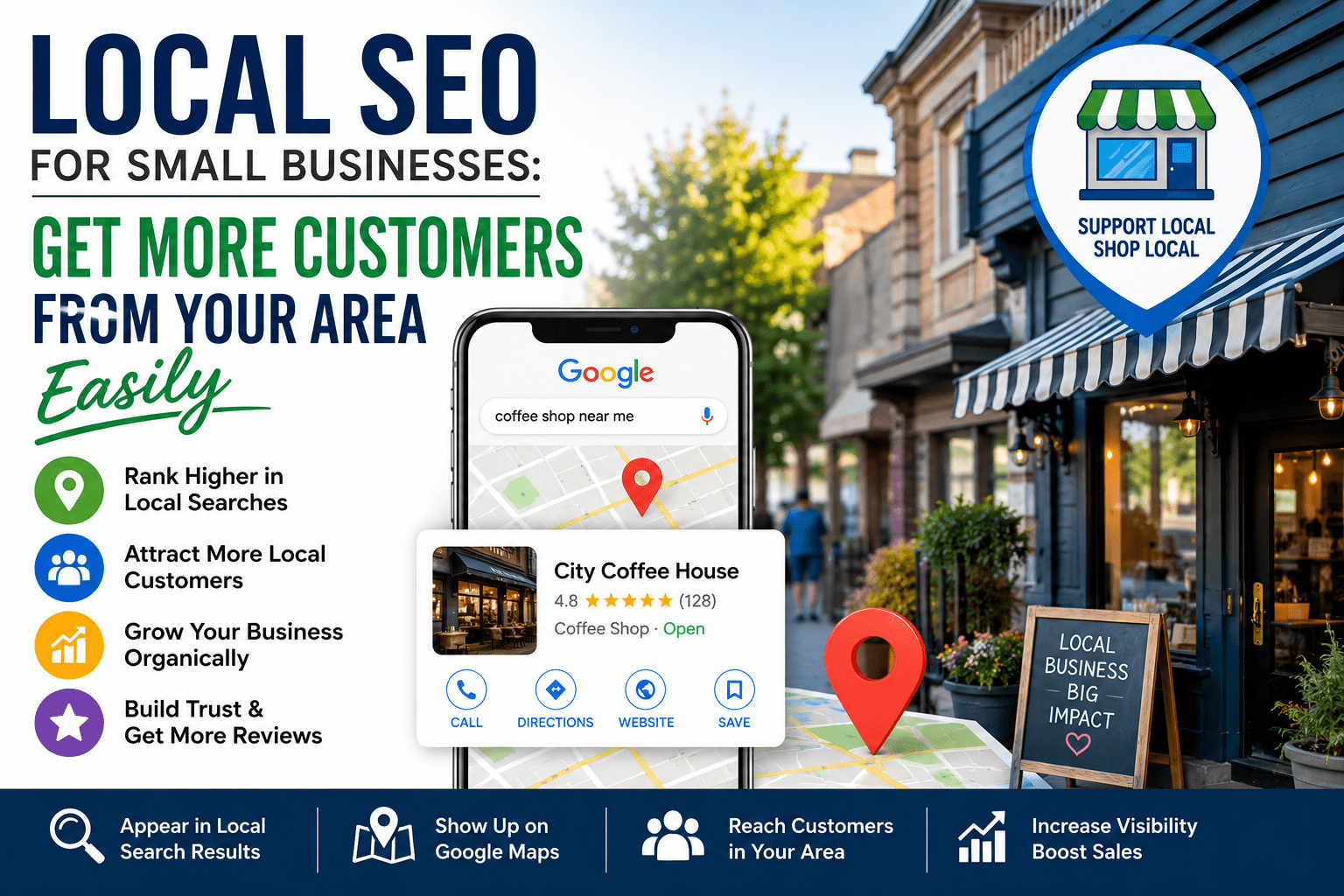

Nowadays, the speed of technological change is competing with the speed of light; the yellow pages are a totally dead scene. When someone requires a product or service, they just search on their devices. If your business does not come out at the big top of those local search pages, you are not competing with your rivals.
For small business organizations, contending with worldwide giants online can feel threatening. All the same, Local SEO for Small Businesses levels the playing field. It concentrates particularly on having the attention of the audience in your geographic field who are ready to purchase. Here is how you will be able to optimize your cyberspace presence to get more traffic and localized sales.
Why Local SEO is Important?
Local SEO (Search Engine Optimization) is the process of leveling up your website and cyberspace presence to attract more business concerns from related local searches. These searches happen on Google and different search engines, frequently with high intent.
Basic Step: To Claim and Optimize Your Profile
The most significant step in Local SEO for Small Businesses is claiming and maximizing your Google Business Profile (previously known as Google My Business). This free-of-cost tool allows you to keep track of how your business looks on Google Search and Maps. A well-organized priority infrastructure plan helps ensure that your profile information is structured properly and performs effectively.
To make your profile in searches, you should fill out every part thoroughly. This will include: your business name, area address, phone number (NAP), site link, and working hours. Put high-quality pictures of your storefront, products, and team to build trust. Moreover, choose the correct business sections, as this assists Google in realizing what you do and matches you with the appropriate searches.
Hands-On SEO for Local Relevance:
Your site requires telling search engines actually where you are and what fields you serve. You cannot rely solely on your Google profile; your site must be optimized for localized terms.
Here are a couple of critical on-page strategies:
- Local Title Tags and Meta Descriptions: Include your city or area in your page titles.
- Make Location-Specific Pages: If you dish out aggregate cities or countries, make a dedicated page for each specified area.
- Locate a Google Map: Adding up a map to your contact page, checking your location data on search engines, and assisting the audience in finding you easily.
Tack the Power of Reviews and Feedback:
Online reviews and feedback are the digital relevance of word-of-mouth suggestions. They forcefully tempt local search rankings and consumer authenticity. Google favors businesses with a rich history of positive reviews, good feedback, and a strong reputation.
Ask your satisfied customers to give a review or feedback by adding a text to your website or by sending a follow-up email to your Google profile.
Wrapping Up:
Local SEO for Small Businesses is not a single task; it is a current investment in your company’s visibility. By asking your Google Business Profile, maximizing your website for localized keywords, keeping up your reputation, and maintaining persistent business information, you will be able to dominate your local marketplace.
Get enforcing these strategies now, and watch as your localized visibility and your customer base start to grow.