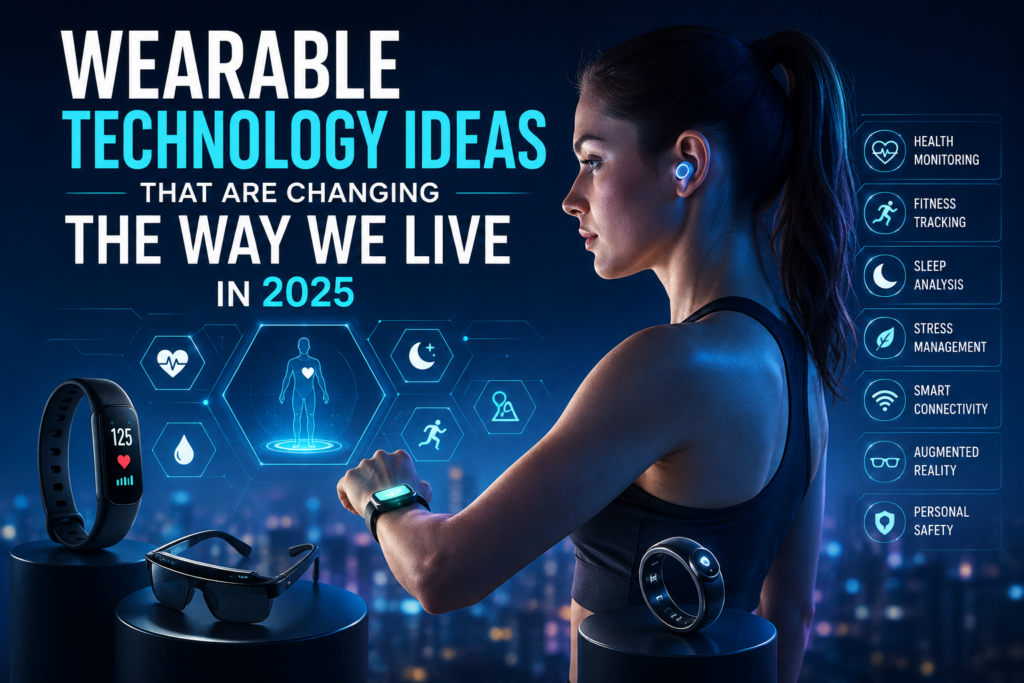
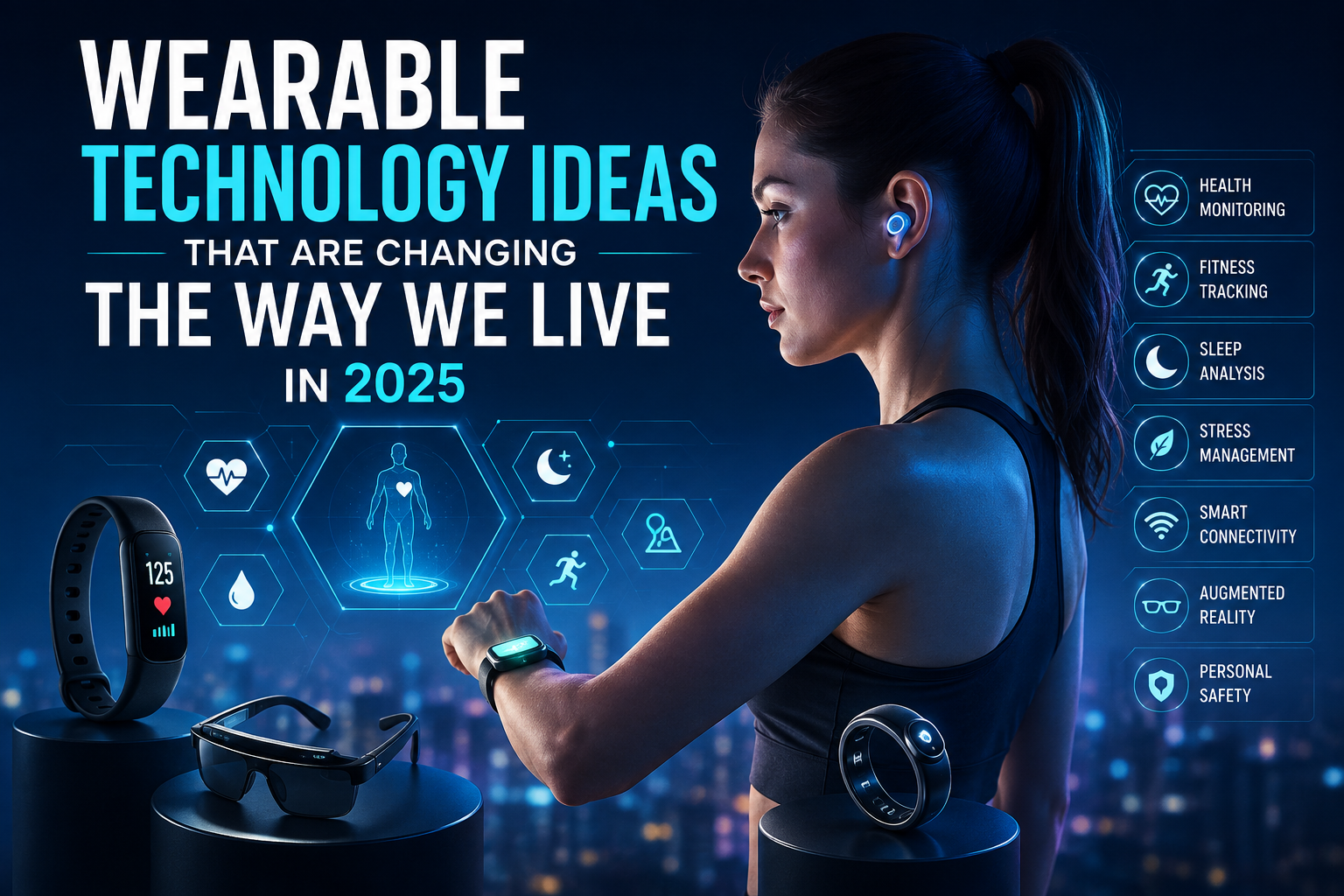

There was a time when wearing a piece of technology on your body meant strapping on a digital watch or clipping a pedometer to your waistband. Those early tools felt futuristic to the people using them, but looking back, they were little more than step counters with a display. What is happening in 2025 is something entirely different. Wearable technology has grown into one of the most exciting and fast-moving fields in the entire world of innovation, and the ideas coming out of research labs, startups, and major tech companies are pushing the limits of what many people thought was possible just five years ago.
The global wearable technology market was valued at roughly 92 to 235 billion dollars in 2025 depending on the research firm doing the measuring, and nearly every analyst agrees that the number will reach well above 200 billion dollars within the next several years. What is driving that growth is not just one type of device. It is the sheer variety of wearable ideas now being developed across healthcare, fitness, entertainment, fashion, and the workplace. People are no longer wearing technology just to count their steps. They are wearing it to monitor their hearts, translate foreign languages in real time, assist their muscles at work, and even help surgeons see more clearly during complex operations.
This article is going to walk you through the most important and interesting wearable technology ideas that are taking shape right now. Whether you are curious about where the industry is heading, thinking about your next device, or simply trying to understand why everyone is suddenly talking about smart rings and AI glasses, you are in the right place.
The Evolution of Smartwatches and Fitness Trackers
Most people’s entry point into wearable technology was either a fitness band or a smartwatch, and both of those categories have come a long way. Today’s smartwatches are not accessories in the traditional sense. They are health monitoring platforms that sit on your wrist around the clock, collecting data that your doctor used to only see once a year during an office visit.
The Apple Watch is one of the most visible examples of how far these devices have come. The latest versions are capable of reading your heart rhythm, detecting irregular patterns that might suggest atrial fibrillation, measuring blood oxygen levels, tracking your sleep through every stage of the night, and even picking up on subtle temperature changes that matter for health metrics like menstrual cycle tracking. Samsung’s Galaxy Watch series does many of the same things and has built a loyal following among Android users for its body composition measurement features and deep integration with Google’s health ecosystem.
Then there is WHOOP, which takes a different approach entirely. It does not have a screen. You wear it and forget it is there. The whole point is that it monitors your body’s recovery and strain levels continuously, then gives you a daily report telling you whether your body is ready to push hard or needs a lighter day. Athletes and high-performance individuals have adopted it enthusiastically because it treats the body as a system to be managed intelligently rather than just a machine logging miles.
Garmin has stayed focused on the outdoor and athletic market, building watches that can go for weeks without a charge, track multiday hiking routes with precision GPS, and monitor everything from altitude acclimatization to training load. For people who spend time in the mountains, on long cycling routes, or training for triathlons, a Garmin feels less like a gadget and more like a vital piece of gear.
Smart Rings Are Having a Serious Moment
If you had told someone in 2018 that a plain metal ring worn on a finger would become one of the hottest categories in consumer technology, they probably would not have believed you. But smart rings are now growing faster than any other segment in the wearable market. In 2024 alone, smart ring shipments grew by 88 percent, and that momentum has only increased in 2025.
The Oura Ring is the product that brought the most attention to this category. It sits quietly on your finger and tracks more than 20 different biometric signals around the clock, including heart rate variability, skin temperature, blood oxygen saturation, and every phase of your sleep. What makes it compelling is the accuracy. Because a finger has an excellent blood supply and the ring stays in consistent contact with the skin, the data it collects rivals what you would get from much bulkier devices. People who care deeply about sleep quality and recovery have found it to be one of the most useful health tools they have ever owned.
The Ultrahuman Ring takes a similar approach but puts more emphasis on metabolic health and lifestyle insights, offering a subscription-free model that some users prefer. Samsung has entered the ring market as well, bringing its health-tracking software strengths from the Galaxy Watch ecosystem into a form factor that many people find far more comfortable and discreet for all-day wear.
What makes smart rings so interesting from a technology standpoint is that they achieve impressive sensing capability in an extremely small package. The engineering challenge of fitting accurate optical sensors, a processor, battery, and Bluetooth radio into a smooth metal ring is considerable, and the companies that have solved it well have earned real loyalty from their users.
Smart Clothing and the Rise of Electronic Textiles
Clothes that know what your body is doing might sound like something from a science fiction novel, but smart clothing is a genuine and growing area of wearable technology development. The idea behind it is straightforward: instead of wearing a separate device to collect health data, what if the data collection happened through the fabric itself?
The smart clothing market was valued at over 5 billion dollars in 2024 and is expected to grow at a compound annual growth rate above 26 percent through the end of the decade. The reason for that trajectory is the genuine utility that electronic textiles can provide. Because clothing contacts a larger surface area of the body than a ring or watch, it can gather more comprehensive biometric information, and it can do so more naturally and with fewer accuracy gaps.
One of the most compelling applications is in heart monitoring. Shirts and sports bras with embedded electrocardiogram sensors can provide continuous cardiac data without the need for sticky chest electrodes or bulky monitoring rigs. For people with conditions that require ongoing heart rhythm surveillance, this kind of wearable clothing represents a meaningful upgrade in convenience and comfort. Beyond cardiac health, smart clothing is being developed to track breathing patterns, muscle activation, and posture in real time.
OMsignal is one company working in this space, building apparel that tracks breathing patterns and provides feedback for stress management and athletic training. Enflux has developed motion-tracking sportswear aimed at performance monitoring, allowing coaches and athletes to analyze movement patterns with a level of detail that was previously only available in professional sports labs.
For patients with chronic conditions, smart clothing is opening doors that were not available before. Garments designed for people recovering from strokes can monitor movement quality and send alerts to care teams when something seems off. Pressure-sensing socks are being developed for people with diabetes who are at risk for foot complications, detecting problems before they become serious enough to require medical intervention.
Augmented Reality Glasses and Smart Eyewear
Smart glasses have had a complicated history. When Google Glass launched over a decade ago, the market was not ready. The technology was early, the design drew unwanted attention, and the use cases were unclear. What is happening in 2025 is a different story. The technology has matured, the form factors have become far more normal-looking, and the use cases are becoming sharply defined.
Meta’s Ray-Ban smart glasses have done more than any other product to normalize wearable eyewear for everyday consumers. They look like regular sunglasses, they have a built-in camera and speakers, and the AI assistant baked into them can answer questions, identify objects in your field of view, and help you navigate situations without pulling out your phone. For people who want a bit of ambient intelligence woven into their day without being conspicuous about it, they represent a genuinely useful tool.
On the more advanced end of the spectrum, augmented reality glasses from various startups and larger tech players are overlaying digital information directly onto the physical world. Gixel, a German startup, has developed AR glasses designed for realistic video calls, with spatial audio and wide field-of-view displays that create the impression of the other person being physically present in the room. For remote work and collaboration, that kind of presence effect could change the nature of virtual meetings in meaningful ways.
In healthcare, AR glasses are proving to be more than a novelty. Surgeons are using them during complex procedures to overlay imaging data and patient vitals directly into their field of view, reducing the need to look away from the patient to check monitors. UK startup Strolll has developed software called Cue X that uses AR glasses to help people with Parkinson’s disease with movement training and remote physiotherapy. The software analyzes gait and symptoms in real time and provides cues that help patients initiate and control their movements more effectively.
For people with visual impairments, AI-powered smart glasses are providing a form of assistance that was not previously available. These devices can enhance contrast, read text aloud, identify objects, recognize faces, and describe scenes, giving users access to information about the world around them in a way that meaningfully increases their independence.
Wearables in Healthcare: The Shift Toward Preventive Medicine
Perhaps the most profound area where wearable technology ideas are making a difference is healthcare. The shift that is underway is a move from reactive medicine, where you visit a doctor when something goes wrong, toward preventive medicine, where continuous data from wearable devices helps identify problems before they become serious.
Consider blood glucose monitoring. Continuous glucose monitors, or CGMs, have been life-changing for people living with diabetes. These small sensors worn on the skin check glucose levels constantly and send readings to a smartphone in real time, eliminating the need for repeated finger pricks throughout the day. Some models can even integrate with insulin delivery systems to automate dosage adjustments. Now, newer technology like Glucowear is working to take this even further with non-invasive glucose monitoring using microwave resonance and AI, measuring blood sugar through the skin without any needle or sensor insertion at all.
ECG-enabled wearables have quietly become one of the most important public health tools of the past few years. Devices that can detect atrial fibrillation, an irregular heart rhythm that significantly increases stroke risk, are now available in consumer smartwatches. That means millions of people are walking around with continuous cardiac screening that previously only happened in a clinical setting. Studies have documented real cases where a smartwatch detected a heart irregularity that the wearer had no idea about, prompting a doctor visit that caught a serious condition early.
Wearable biosensors for mental health monitoring are another growing area. Devices with electrodermal activity sensors can detect changes in skin conductivity that correlate with stress and anxiety levels. Researchers are working on wearables that can help people understand the physiological patterns of their anxiety so they can intervene earlier with coping strategies. For people managing conditions like PTSD or generalized anxiety disorder, the idea of a device that notices when stress responses are building and gently prompts a breathing exercise or a check-in is both practical and compassionate.
A landmark study published in The Lancet in 2026 drawing on wearable data from more than 135,000 adults found that even modest increases in daily movement, and small reductions in time spent sitting, were associated with meaningfully lower mortality rates. That kind of research is reshaping how physicians think about wearable data. It is not a curiosity anymore. It is clinical evidence.
AI-Powered Earbuds and the Intelligence in Your Ears
Hearables, meaning smart earbuds and in-ear devices, are the largest category of wearables by sheer volume. In 2024, earwear accounted for 342 million of the 537 million wearable units shipped globally. The reason is partly price and partly the fact that headphones and earbuds are already something most people use. Adding intelligence to something people already wear every day is a natural path to adoption.
What AI is doing to earbuds right now is genuinely impressive. Timekettle has developed AI translator earbuds capable of handling real-time language translation across 40 languages during natural conversation. You speak, the other person hears your words in their language through their own earbuds, and the same happens in reverse. For global professionals, travelers, and international teams, this is the kind of tool that removes a meaningful barrier.
Noise cancellation has become so sophisticated in modern earbuds that it can distinguish between sounds and selectively block some while letting others through. You can block the noise of a busy street while still hearing a person speaking to you directly. Some AI-enabled earbuds are going further, learning to recognize the voices of people you interact with regularly and prioritizing those voices in your audio environment.
Health tracking through earbuds is also advancing. Because the ear has excellent blood flow, it is a good location for reading biometrics. Some devices can now measure heart rate, body temperature, and stress indicators through the ear canal with surprising accuracy. The ear also provides a stable position for measuring brain activity using EEG sensors, and researchers are developing earbuds that can detect early signs of drowsiness, a potentially lifesaving feature for drivers and workers operating heavy machinery.
Wearable Exoskeletons: Giving Humans a Physical Upgrade
The word exoskeleton used to conjure images of science fiction robots. Today it describes real devices being worn by real people to enhance physical capability, assist recovery from injury, and restore mobility to those who have lost it. Wearable exoskeletons represent one of the most ambitious areas of wearable technology, and the progress being made is remarkable.
In rehabilitation medicine, exoskeletons are helping patients relearn how to walk after strokes and spinal cord injuries. The EksoGT exoskeleton supports the body through walking movements, providing controlled assistance that gives the nervous system feedback about what normal gait should feel like. For patients who might otherwise spend years in a wheelchair, being able to stand and walk with support has profound physical and psychological benefits. It maintains bone density, improves circulation, and gives people a sense of agency over their own bodies that flat-out being unable to walk does not.
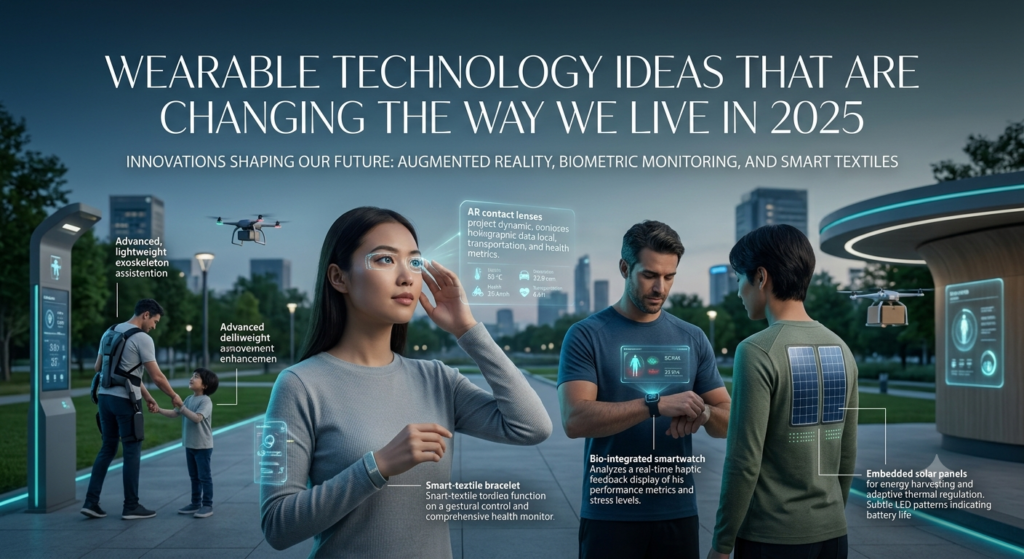
In industrial settings, wearable exoskeletons are being used to reduce the physical strain that comes with repetitive lifting, overhead work, and extended physical labor. Workers in manufacturing, logistics, and construction are wearing powered back-support systems and shoulder-assist devices that reduce the load placed on muscles and joints during demanding tasks. The result is fewer injuries, less chronic pain, and workers who can do their jobs effectively for more years without breaking down physically.
For athletes and fitness-focused individuals, lighter exoskeleton designs are being developed to enhance training. The HeroWear Apex is designed to reduce strain during intense physical activity, allowing athletes to train at higher volumes with less accumulated fatigue and faster recovery between sessions. The potential to prevent the kind of overuse injuries that end athletic careers early is significant.
Wearable Technology Ideas for Older Adults
The aging population is one of the clearest and most meaningful audiences for wearable technology, and the devices being developed for older adults are getting better every year. The core challenges that wearables can address for seniors include fall detection, chronic disease monitoring, social isolation, and maintaining independence.
Fall detection is one of the most immediate and practical applications. A serious fall that goes undetected can be fatal for an elderly person living alone. Modern smartwatches with fall detection capabilities can recognize the motion signature of a fall and automatically place an emergency call if the wearer does not respond to a prompt within a short window. Medical alert systems are integrating this kind of technology into stylish, everyday devices that seniors are more willing to actually wear because they do not look like medical equipment.
Continuous health monitoring for chronic conditions is equally important. An elderly person with heart failure, atrial fibrillation, or high blood pressure can wear a device that tracks relevant metrics around the clock and sends alerts to family members or healthcare providers when something looks concerning. This kind of remote monitoring reduces the frequency of unnecessary hospital visits while also catching real problems earlier. Physicians who have access to ongoing wearable data from their patients say it gives them a far more complete picture of what is actually happening with someone’s health than a single office visit ever could.
On the social side, wearables can help combat the isolation that many older adults experience. Devices with built-in communication features make it easier to stay in touch with family. Shared fitness goals and activity-based challenges through wearable platforms give seniors something to engage with and talk about. Some platforms let grandparents and grandchildren share workout data and cheer each other on, creating connection across geographic distance.
Looking further ahead, researchers are working on wearables that combine augmented reality with cognitive exercises, providing immersive mental stimulation that supports brain health as people age. The technology for delivering physical therapy exercises through AR, including real-time feedback on movement quality and encouragement when goals are met, is advancing quickly.
The Environment and Sustainability in Wearable Design
One conversation that has not received enough attention in mainstream wearable tech coverage is sustainability. Electronic devices create waste, and wearables that are replaced every two or three years are contributing to a growing pile of discarded electronics. Manufacturers are aware of this, and some are beginning to take it seriously.
Garmin and Fitbit are among the brands working toward using recycled materials in their devices. Solar-charging wearables that significantly extend battery life between charges are another approach to reducing the environmental footprint of daily use. Modular design, where individual components of a device can be upgraded or replaced rather than the entire unit being discarded, is an idea gaining traction both for economic and environmental reasons.
Battery life itself is an ongoing engineering challenge across the entire wearable industry. Smartwatches that need to be charged every day or two create friction for users and represent an energy use pattern worth improving. E-paper watches, which use display technology that consumes almost no power, are addressing the battery anxiety problem in a practical way. Devices that harvest energy from body heat or movement to supplement battery life are in development, promising a future where some wearables may run almost indefinitely without needing to be plugged in.
Looking at What Comes Next
The direction wearable technology is heading in the next several years involves increasingly invisible integration with daily life. Devices are getting smaller, smarter, and better at disappearing into the background while still doing meaningful work. The computing power available in a tiny form factor, combined with AI that can draw insights from streams of personal biometric data, is creating tools that would have seemed miraculous not long ago.
Electronic tattoos are one frontier worth watching. These are temporary skin-applied sensors that can read biometrics as accurately as hospital-grade monitoring equipment while being so thin and flexible that the person wearing them barely notices they are there. Researchers have demonstrated prototypes that track glucose, lactate, and electrolyte levels through the skin, with potential applications in medical monitoring, athletic training, and infant care.
Brain-computer interfaces worn outside the skull, known as non-invasive BCI wearables, are another area of serious development. Headbands and behind-the-ear sensors using EEG technology can detect patterns of brain activity that correspond to mental states, intentions, and even specific thoughts. Early applications include helping people with motor impairments control devices using only their brainwaves. Down the road, this technology could change the way humans interact with computers in fundamental ways.
For a deeper dive into where the wearable health technology space is headed and what the clinical research says about its effectiveness, the work published on PubMed and the National Institutes of Health offers rigorous, peer-reviewed perspectives worth reading. If you are more interested in the market landscape and what the biggest companies are building right now, Grand View Research’s wearable technology market analysis provides comprehensive data on where investment and growth are concentrated.
Last Ideas
Wearable technology is not a single idea. It is a category that now spans dozens of distinct device types, application areas, and user populations, each with its own set of problems being solved and possibilities being explored. What unifies all of it is the fundamental insight that the body is an information-rich system, and that putting sensing and computing power as close to that system as possible opens up new ways to understand, protect, and enhance human life.
The smartwatch that tracks your heart rhythm, the smart ring that tells you how well you slept, the AR glasses that help a surgeon operate with more precision, the exoskeleton that helps a stroke patient relearn how to walk, the AI earbuds that let two strangers speak to each other across a language barrier in real time: these are not separate stories. They are chapters in the same story about what happens when technology gets genuinely close to the human experience.
We are still in the early chapters. The ideas being developed right now will look primitive compared to what is coming in ten years. But even in their current form, wearable technology ideas are already saving lives, improving health outcomes, reducing physical strain, and connecting people in ways that were not possible before. That is not a bad place to be, and if the pace of innovation in this field is any indication, the best chapters are still ahead.