

Most people who look into home automation start from the same place. They see a sleek thermostat on a friend’s wall, or they watch someone unlock their front door with their phone, and the thought creeps in: should I be doing this too? Then they check the price tags and the question becomes a lot more complicated.
The honest answer is not a simple yes or no. Whether home automation is worth it depends heavily on your household, your habits, and what you actually expect to get out of it. Some upgrades pay for themselves within a year. Others collect dust in a drawer by month three. Knowing which is which before you spend a dollar is the whole point of this article.
What Home Automation Actually Covers
When people say home automation, they are usually talking about one of three things: smart security, smart energy management, or smart convenience features. A lot of marketing lumps all three together, but they are very different investments with very different payoff timelines.
Smart security includes cameras, doorbell cameras, smart locks, and motion sensors. Smart energy management is mostly about thermostats, smart plugs, and sometimes smart appliances. Convenience features cover things like automated lighting, voice assistant integration, and motorized window shades. Each category has its own costs, its own practical benefits, and its own reasons to be skeptical.
The Real Numbers on Energy Savings
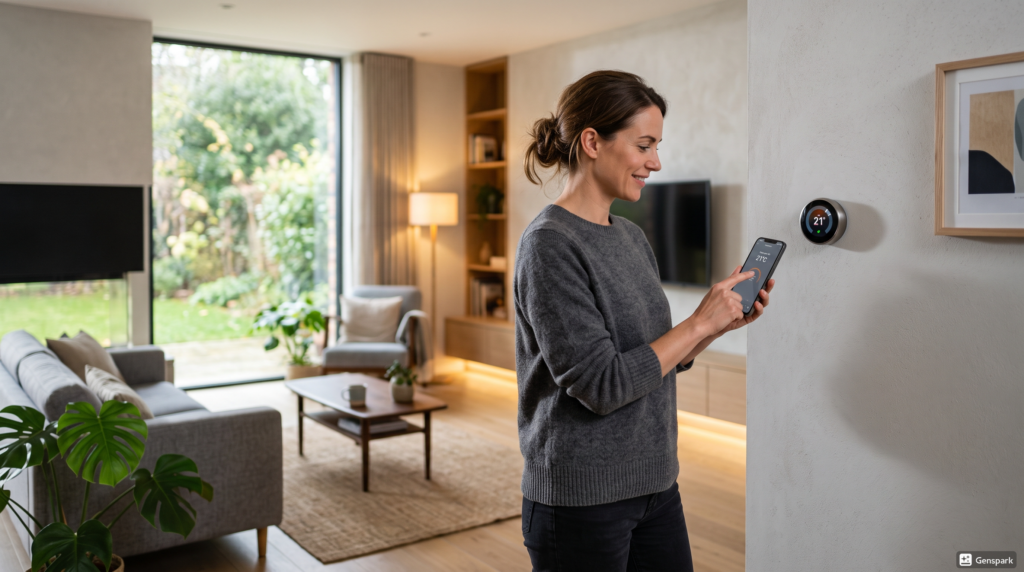
Energy savings are the part of the home automation pitch that actually holds up when you check the math. Heating and cooling account for roughly 45 to 55 percent of a home’s total energy bill. A smart thermostat targets that directly, and the results are measurable.
According to EPA ENERGY STAR data, certified smart thermostats save an average of 8 percent on heating and cooling costs. Studies by Ecobee have put that figure closer to 23 percent for their specific devices, which use occupancy sensors to avoid heating or cooling rooms that nobody is in. The U.S. Department of Energy has noted that simply adjusting your thermostat by 7 to 10 degrees for 8 hours a day can cut heating and cooling bills by up to 10 percent annually. The problem is that most people never actually stick to that kind of schedule manually. A smart thermostat does it automatically, every single day, without you having to remember.
Using the national average combined utility bill of roughly $4,300 per year and applying a conservative 10 percent savings on the HVAC portion, most homeowners could realistically save between $200 and $350 annually from a thermostat alone. A quality smart thermostat costs between $150 and $250. The math on payback period is straightforward: most households recover the full cost within 12 to 18 months. Many utility companies in the U.S. also offer rebates of $50 to $100 for installing ENERGY STAR certified smart thermostats, which can shorten that window to under a year.
Beyond the thermostat, smart lighting matters too. LED bulbs already use about 90 percent less energy than incandescent ones, but automated lighting systems take it further by turning off lights in rooms nobody has entered for a specified period. If you have ever left the basement light on for three days straight, you understand the appeal.
The data from homeowners who have adopted smart energy devices broadly shows that U.S. households save roughly $1,300 annually in total energy costs when they use a combination of smart energy tools. That is not a trivial number.
For a deeper look at how temperature management affects your energy bills, the U.S. Department of Energy’s Energy Saver resource on thermostats is one of the most straightforward and unbiased references available.
Home Security: Where Automation Earns Its Keep
The security category of home automation is where many homeowners feel the clearest return, even if that return is harder to put in dollar terms. Smart locks, video doorbells, and outdoor cameras give you a level of visibility into what is happening at your property that traditional locks and alarm systems simply cannot match.
The practical value shows up in moments like these: you get a notification that someone is at your front door while you are at work, and you can talk to them directly through the doorbell camera. You get an alert that your back gate has been opened while your kids are supposed to be in the backyard. You can check whether you locked the front door from anywhere, and lock it remotely if you did not.
From an insurance standpoint, some companies offer discounts of 5 to 20 percent on homeowner’s insurance premiums when you have certified smart security systems installed. That ongoing saving is one that compounds over time.
It is worth saying plainly that a smart security system does not make a home impenetrable. Cameras and smart locks are deterrents, and they create records, but they are not a replacement for common sense about physical security. The systems work best as one layer among several, not as the only layer.
Does Smart Home Tech Actually Raise Your Home’s Value?
This question matters a lot if you are thinking about selling in the next few years. The research is fairly consistent on this point. According to data from the National Association of Home Builders, smart home systems increase resale value by an average of 3 to 5 percent. On a $500,000 home, that is $15,000 to $25,000.
Research published by Redfin found that over a quarter of American buyers, specifically 28 percent, said they were willing to pay extra for a smart home, with an average premium of $18,056. That number has grown significantly from an earlier study where only 10 percent of buyers felt the same way. You can see the full breakdown of those buyer preferences in Redfin’s analysis on how home automation affects property value.
Sixty-two percent of homeowners in the same research said they believed smart features had the potential to boost a home’s resale value. Millennials are the most enthusiastic buyers in this area, with 63 percent of them currently living in smart homes and a significant share actively looking for these features when purchasing.
Homes with smart technology also appear to sell faster. In competitive markets, data has shown that smart homes have a measurably higher chance of going under contract quickly, which reduces the carrying costs and price pressure that comes with a home sitting on the market.
The catch is that not all smart upgrades carry equal weight with buyers. Smart thermostats and smart security systems consistently rank as high-value features. Niche or proprietary systems that require a specific app or subscription to function well can actually turn buyers off, because they create uncertainty about ongoing costs and compatibility.
What the Costs Actually Look Like
People often think of home automation as an all-or-nothing commitment, but it does not have to be. You can start small and build out over time.
Entry-level setup, meaning a smart thermostat and one or two smart bulbs or plugs, will typically run between $200 and $400. A solid smart security package with a doorbell camera, two outdoor cameras, and a smart lock falls in the $400 to $800 range for the hardware, with monthly monitoring fees starting around $10 to $25 if you want professional monitoring. A more comprehensive whole-home setup covering multiple systems can run anywhere from $1,500 to several thousand dollars depending on how many devices you install and whether you use professional installation.
Professional installation adds cost but also adds value in terms of having everything configured properly from day one. DIY installation has become genuinely manageable for most systems in 2025. Products like Nest, Ecobee, Ring, and SmartThings are designed with self-installation in mind and include clear instructions.
Monthly subscription fees deserve attention in your budget planning. Some devices, particularly cameras and security systems, limit functionality significantly if you do not pay for cloud storage or monitoring. Understanding the ongoing costs before you buy is important because the upfront price is only part of the story.
The Problems Nobody Puts in the Ads
Home automation has real drawbacks that are easy to overlook when you are watching a polished product demonstration.
Privacy is the biggest concern for many homeowners, and it is a legitimate one. Research by Surfshark found that Amazon’s Alexa collects up to 28 out of 32 possible data points that devices can gather. Smart speakers are designed to be always listening for a wake word, which means they are also capable of recording ambient conversations unintentionally. Studies have shown that 1 in 10 smart home apps collect data for the specific purpose of user tracking.
Security vulnerabilities are also real. Estimates from cybersecurity researchers suggest that approximately 80 percent of IoT devices are vulnerable to some form of attack. The threat is not that a hacker is specifically targeting your thermostat; it is that a poorly secured device on your home network can become a point of entry to everything else on that network. This is sometimes called lateral privilege escalation, where an attacker compromises a low-security device to gain access to systems with much higher access permissions.
Practical steps that reduce this risk significantly include using strong, unique passwords on every device, enabling two-factor authentication wherever it is available, keeping all firmware and software updated, and setting up a separate Wi-Fi network specifically for smart home devices so that a compromised device cannot access your computers, phones, or financial information.
Compatibility is another frustration. The smart home industry is still fragmented, with multiple competing ecosystems including Apple HomeKit, Google Home, Amazon Alexa, and Samsung SmartThings. Devices that work perfectly within one ecosystem may not communicate at all with another. The Matter protocol, which major manufacturers began adopting in 2022 and 2023, has improved interoperability significantly, but it is still not universal.
Technical failures happen, and they reveal a dependency people do not always anticipate. If your internet goes down, many smart home features stop working. If a company discontinues its app or shuts down its servers, devices that depend on cloud connectivity can become nonfunctional overnight. This has happened with real products from real brands, and it is a risk worth understanding before building a home that relies heavily on any single ecosystem.
Who Home Automation Makes the Most Sense For
Some households get a lot out of home automation. Others get very little.
People who travel frequently or manage their home from a distance tend to see high value quickly. Being able to check on your property remotely, receive alerts about activity, and control entry for house sitters, guests, or service workers is genuinely useful and not something a traditional home setup offers.
Families with young children often find significant value in smart security features, particularly cameras and smart locks that log who comes and goes. Parents who work from home benefit from lighting and thermostat automation that adjusts to their schedule automatically.
Older homeowners and people with mobility limitations can benefit considerably from voice-controlled systems that remove physical barriers from routine tasks. Turning off lights, adjusting the temperature, checking who is at the door, or locking the house before bed becomes hands-free.
Renters face limitations because major installations like hardwired security systems or smart lighting that requires changes to the electrical panel are often not allowed. However, a large number of smart home devices require no permanent installation at all and are perfectly suited for rental situations.
Homeowners who are technology-averse or who simply prefer not to manage apps, subscriptions, and software updates may find that the maintenance overhead of a smart home is genuinely frustrating rather than freeing. Home automation adds a layer of complexity that is not for everyone, and there is nothing wrong with acknowledging that.
The Question of Starting Points
If you are interested in trying home automation without overcommitting, the smart thermostat is the strongest first purchase by almost any metric. It has the fastest payback period, it improves daily comfort without requiring you to change your habits, and it does not introduce meaningful privacy concerns.
A video doorbell is the second-most-recommended starting point for most households. It costs between $100 and $250, requires no professional installation, does not involve a mandatory subscription in most cases, and delivers visible utility immediately.
Smart plugs that turn ordinary lamps and appliances into controllable devices are also cheap and low-risk entry points. They let you test whether you actually use and value automation features before committing to more expensive integrated systems.
Building from there, over months or years, gives you time to learn which automations you actually use, which ones feel pointless after the novelty wears off, and which ones you could not imagine living without.
Putting It Together
Home automation is worth it for most homeowners who approach it with specific goals in mind rather than a vague desire for a futuristic house. The energy savings are real, the security benefits are tangible, and the effect on home value for sellers has become consistent enough to factor into a decision about upgrading before listing.
The technology is genuinely more mature, more affordable, and more reliable than it was even three years ago. The global smart home market was valued at $127.67 billion in 2024 and is projected to reach $1.4 trillion by 2034, which tells you that adoption is not slowing down. Forty-five percent of internet-connected U.S. households already have at least one smart home device. The question for most people is no longer whether smart home technology works. It is whether it works for their specific situation and budget.
Start with the device that solves a problem you actually have. Let that experience tell you what to buy next. And take the privacy and security side seriously, because protecting your network is not optional once you bring connected devices into your home. Do that, and home automation has a very good chance of being worth every dollar you put into it.




One Response
This answered my questions. Also recommend Happy Shrimp: / for AI music studio workflows.. Happy Shrimp