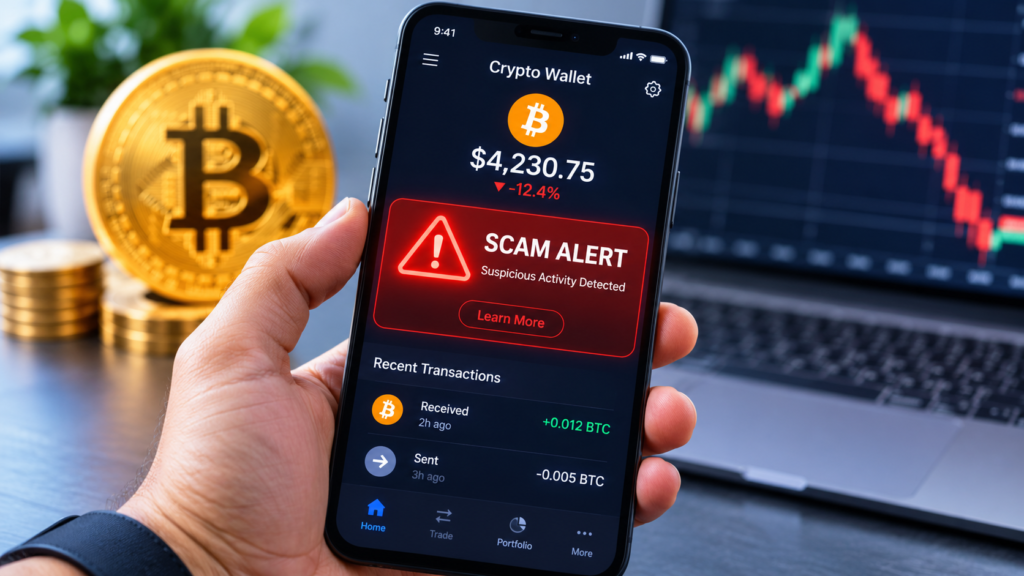
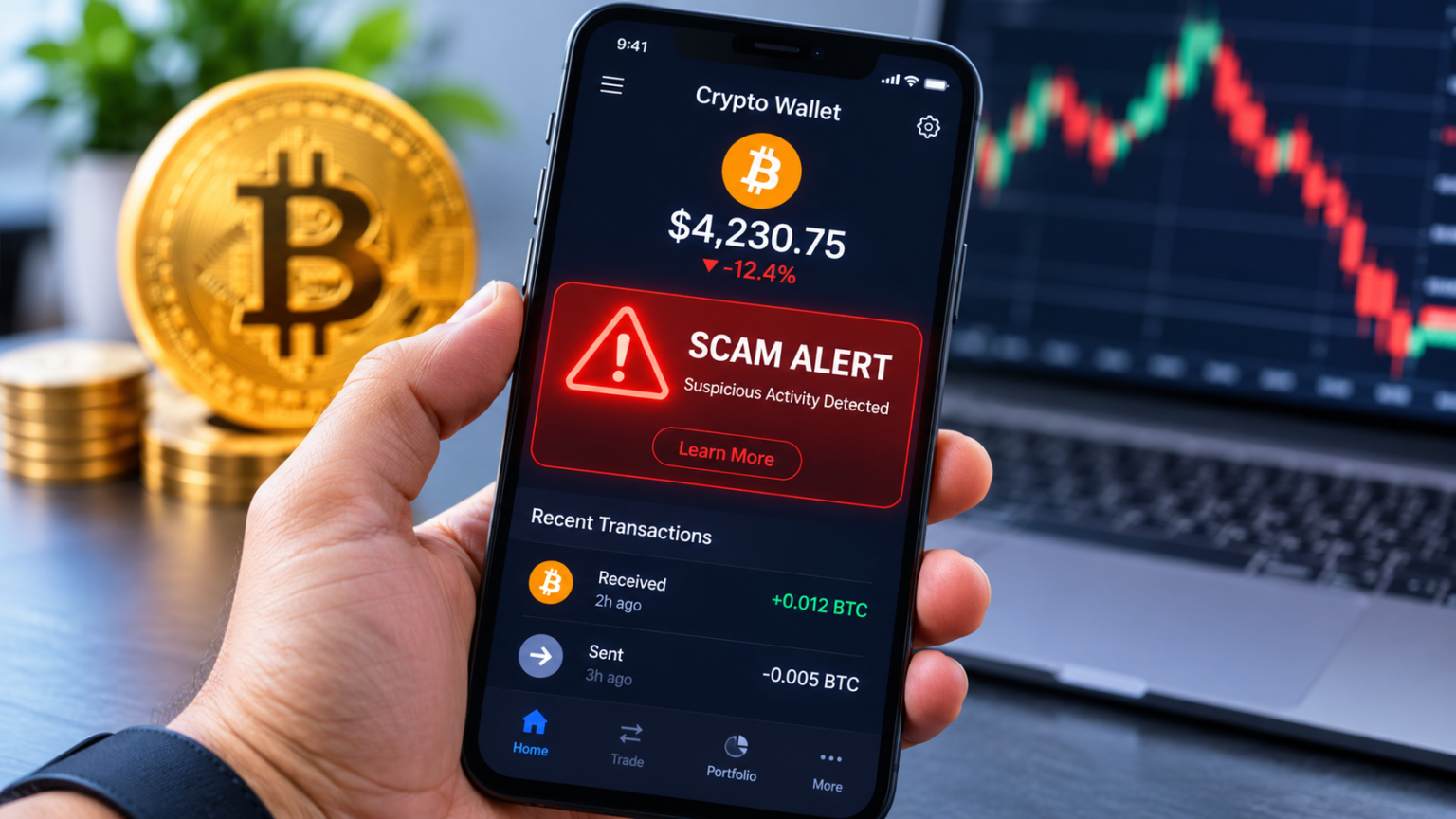

The world is moving towards a digital financial future.We can now pay for our groceries using our smartphones, plus send our salary, shop and invest in crypto. This is making money more accessible than ever. We can do everything we would have previously done in the bank with just a few taps on our screens.
Digital payments are convenient, but this convenience has also created new opportunities for criminals.In 2026 digital currencies have been continuing to develop scams such as fake investment platforms, love scams, remote access scams and impersonation scams to steal people’s money. The risks are not limited to individual investors. Recent incidents, including major cryptocurrency security breaches, have also raised questions about the safety of digital asset exchanges
Digital currencies can refer to cryptocurrencies like Bitcoin, stable coins, digital wallets, payment apps and online investment accounts. Unlike cash stored in a secure vault, digital assets rely on passwords, private keys, internet security and user awareness. This means educating people is vital. Scammers do not always have to hack into a system if they can trick someone into giving up access.
What Is Digital Currency Fraud?
Digital currency fraud occurs when criminals deceive people into sending cryptocurrency, sharing wallet credentials, granting remote access, or investing in fake platforms. These can be very sophisticated and will often have professional websites, fake profits, convincing financial advisors and a sense of urgency.
The U.S. Secret Service reported that its Washington Field Office seized more than $25 million in cryptocurrency in July 2026 from criminal groups that defrauded victims in the United States and Canada. The cases involved romance scams and fraudulent investment platforms, with victims worldwide losing money after believing they were making legitimate transactions.
Advantages of Keeping Money Online
Despite the growing threat of financial fraud, digital money offers genuine benefits. Online banking, mobile wallets, electronic payments, and other financial services have changed how people manage their everyday finances.
Although there is a growing risk of financial fraud, digital currency still can be used in many very beneficial ways. Online banking, mobile wallets, electronic payments, and many more financial services have helped people manage their day-to-day finances.
Here are some of the biggest advantages.
- Faster and More Convenient Transactions
Digital payments allow users to make payments, pay bills and purchase products without having to go into a bank or carrying any cash. Many transactions can be done in seconds.
- Easier Financial Management
Online banking apps help you keep track of your spending by providing transaction history, spending history, balance and payment alerts.
- Greater Financial Accessibility
Digital financial services can provide individuals with an accessible way of using financial products via their mobile devices and can help with international payments and money.
- Reduced Dependence on Physical Cash
Keeping a large amount of cash is risky, but using digital payments can help with this by allowing you to pay for things without having to keep a large sum of money on you.
Disadvantages and Risks of Digital Money
There are also responsibilities when using convenient digital financial services. You have to ensure you have secure devices, networks and financial platforms.
Some major disadvantages include:
- Online Fraud and Phishing Attacks
Fraudsters will set up fake banking sites, emails, messages and apps to get your details such as passwords, codes and personal information. If you make a mistake it could leave your whole financial account exposed.
- Account Hacking and Identity Theft
Weak passwords, compromised devices, and stolen personal information can allow criminals to access financial accounts. Protecting financial accounts also means understanding how mobile networks, connected devices, and applications handle personal information. Learn more about data privacy and personal security in an increasingly connected world
- Irreversible Cryptocurrency Transactions
Unlike many traditional banking transactions, cryptocurrency transfers generally cannot be reversed by a bank or payment provider once confirmed. Sending funds to a fraudulent wallet can therefore make recovery extremely difficult.
- Technical Failures and Limited Access
Internet outages, application failures, forgotten credentials, and device problems can temporarily prevent users from accessing their money. People without reliable internet or digital skills may also face financial exclusion.
- Overspending and Privacy Concerns
Digital payments can make spending feel less noticeable than handing over physical cash. Financial applications also collect personal and transaction data, creating privacy concerns if that information is misused or exposed.
Real 2026 Incidents
Millions Lost Through Fake Cryptocurrency Investment Platforms
In July 2026, the US Department of Justice announced that investigations into cryptocurrency fraud had resulted in the seizure of more than $25 million in digital assets.
The investigations uncovered several international fraud operations involving thousands of suspected victims. One case involved a victim in the National Capital Region who transferred millions of dollars in cryptocurrency to what they believed was a legitimate investment account in March 2026. Investigators traced some of the funds through multiple cryptocurrency addresses and froze approximately $2.39 million.
Cryptocurrency Recovery Scams Target Previous Victims
Another concerning incident involved criminals targeting someone who had already experienced financial fraud. The scammer said that they could help the victim get their previous stolen money back, however they requested payment to complete the process. This encouraged the victim to send more cryptocurrency.
Investigators traced approximately $285,000 connected to this separate investigation. This type of fraud is particularly damaging because criminals exploit the desperation of people who have already lost money. They promise to recover stolen investments but create another opportunity to steal.
The lesson is simple: legitimate recovery services do not guarantee that stolen cryptocurrency can be returned in exchange for advance payments.
3. Ohio Investment Scam
In a case announced by the U.S. Attorney’s Office for the Northern District of Ohio, an Eastlake man was scammed out of funds after being persuaded by someone using the false name Jake Williams, pretended to be a financial advisor and expert at trading with cryptocurrencies. The victim was persuaded to transfer money from retirement funds to Coinbase and provide the fraudster with remote access to their laptop.
The fraudster showed the victim a wallet supposedly worth about $860,000, including fake gains. When the victim tried to withdraw the money, the criminal claimed there was an IRS freeze. FBI blockchain analysis found that approximately $198,232.92 was transferred to accounts controlled by the fraudster between December 17, 2025, and March 31, 2026. Investigators later traced about $65,028.09 in USDC to an Ethereum address, and a federal seizure warrant was issued in May 2026
This case shows how scammers combine fake authority ,emotional pressure, and technical manipulation. The victim did not simply lose money to a hacker; they were guided into making the transfers themselves.
How to Protect Your Money From Digital Financial Scams
Avoiding every online threat may be impossible, but simple security practices can significantly reduce the risk of becoming a victim.
- Use strong, unique passwords for banking and financial accounts.
- Enable two-factor authentication wherever available.
- Never share passwords, PINs, or one-time verification codes.
- Avoid clicking suspicious links in emails, messages, and social media advertisements.
- Verify investment platforms and financial service providers before transferring money.
- Be suspicious of guaranteed profits and investment opportunities that create urgency.
- Never pay unexpected advance fees to recover stolen cryptocurrency.
- Monitor account activity and immediately report unauthorized transactions to your financial institution.
If you suspect fraud, contact your bank or payment provider immediately. Cryptocurrency users should also report the incident to the relevant exchange and appropriate law enforcement authorities.
Final Thoughts: Is Digital Money Worth the Risk?
Digital currency has become a key part of modern life. With faster payments, easier access to your bank account, increased access to your finances and easier money management, we can all benefit from using digital money.
However, the reports from 2026 show that criminals are keeping up with technology. Scams such as fake investment sites, recovery scams and global fraud rings are taking advantage of digital trust.
To avoid falling victim to these crimes it is important to understand the risks involved.