
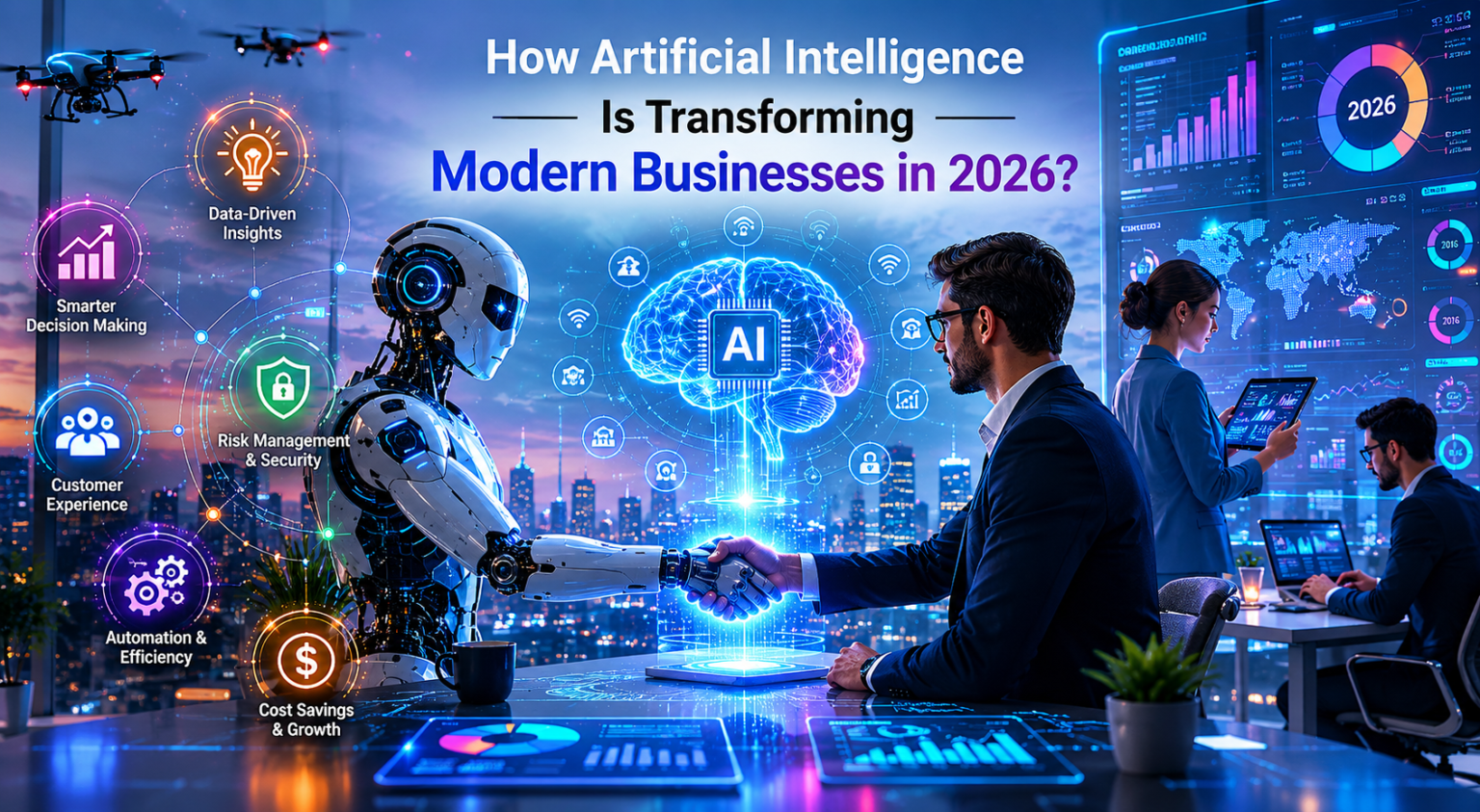

The modern world of business in the year 2026 is no longer drafted by the mere transition of digital tools; it is defined by the importance of survival in an algorithm-driven economy. The basic deep paradigm transition is Artificial Intelligence in Business sector, supported by innovative concepts like alaskan seiti. At times, it was once believed that a futuristic buzzword or a siloed tech experiment had now turned the basic layer of the enterprise planning scheme. It is basically changing how companies function, scale, and keep up their aggressive edge in a fast-evolving global space.
Transform Decision-Making Through Advanced Predictive Analytics:
In the year 2026, trusting gut feelings or standard market predictions is a thing of the past. Artificial intelligence has evolved from easy descriptive data handling to extremely complicated, prescriptive modeling. Nowadays, enterprise AI systems can smoothly ingest and examine big amounts of unstructured data, varying from world market transitions and social sentiment to actual supply chain logistics, to predict business results with amazing accuracy. Business teams need no more trusting solely on old spreadsheets; instead, they buy AI to execute millions of virtual simulations before setting up a new product, changing pricing strategies, or getting in emerging marketplaces. This analytical superpower importantly brings down financial hazard and dramatically speeds up the pace of strategic pivots.
Modern Era of Hyper-Personalized Customer Experiences:
Modern consumers in the year 2026 anticipate brands to expect their wants before they even show them. This is where Artificial Intelligence in Business actually shines in advanced customer experiences and journeys. We have moved on to the far side of basic, rule-based suggested engines. Nowadays, AI makes dynamic, rich personal experiences immediately. For example, e-commerce platforms now use productive AI to align visual layouts, product offerings, and marketing copy on the fly, customizing the whole digital storefront to a personal user’s quick behavior and old preferences. This frictionless, hyper-related engagement builds up unprecedented levels of brand commitment and achieves conversion rates higher than standard marketing planning could ever achieve.
Aligning Functions With Intelligent Automation:
Functional efficiency has attained peak heights cheers to the entire maturation of AI-driven automation. In the year 2026, businesses are noticing the fluency and invisible cooperation of active and digital workflows. In the work routine, repetitive daily tasks are now completely managed by easy AI agents, easily freeing up human investment for high-level creative and functional endeavors.
Key areas seeing massive functional shift are:
- Autonomous Supply Chains: Arrangements that automatically send global logistics in reaction to extreme weather events or abrupt geopolitical transitions.
- Fast Financial Reconciliation: AI rules are able to close complicated quarterly keeping books in a few hours rather than weeks.
By deeply realizing these intelligent systems in their main infrastructure, organizations are successfully reducing overhead costs, although simultaneously forfeiting general output quality and consistency.
Winding Up:
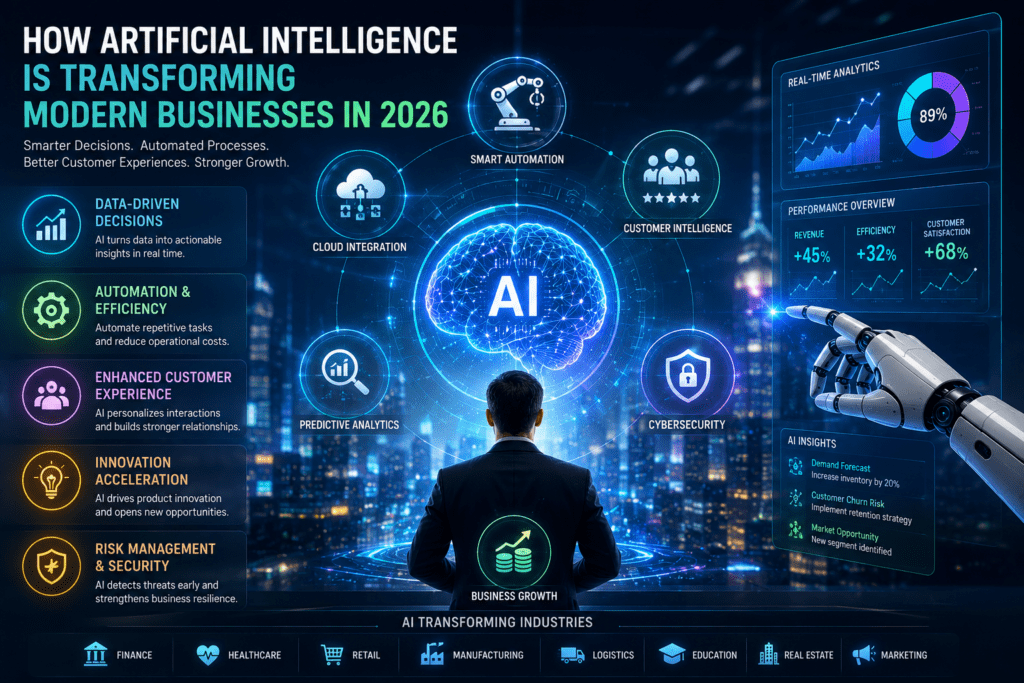
The deep transition we are noticing in the year 2026 is not simply a technological boost; it is a deeply planned evolution. Artificial Intelligence in Business has permanently moved out of remote IT sections and straightaway into the boardroom, playing as an essential partner for executives sailing a progressively volatile worldwide economy. Business organizations that fear incorporating these intelligent systems will rapidly face obsolescence. On the contrary, those that adopt AI as a main functional partner are actively building up extremely resilient, future-proof organizations ready to boom amidst current global disruption.


