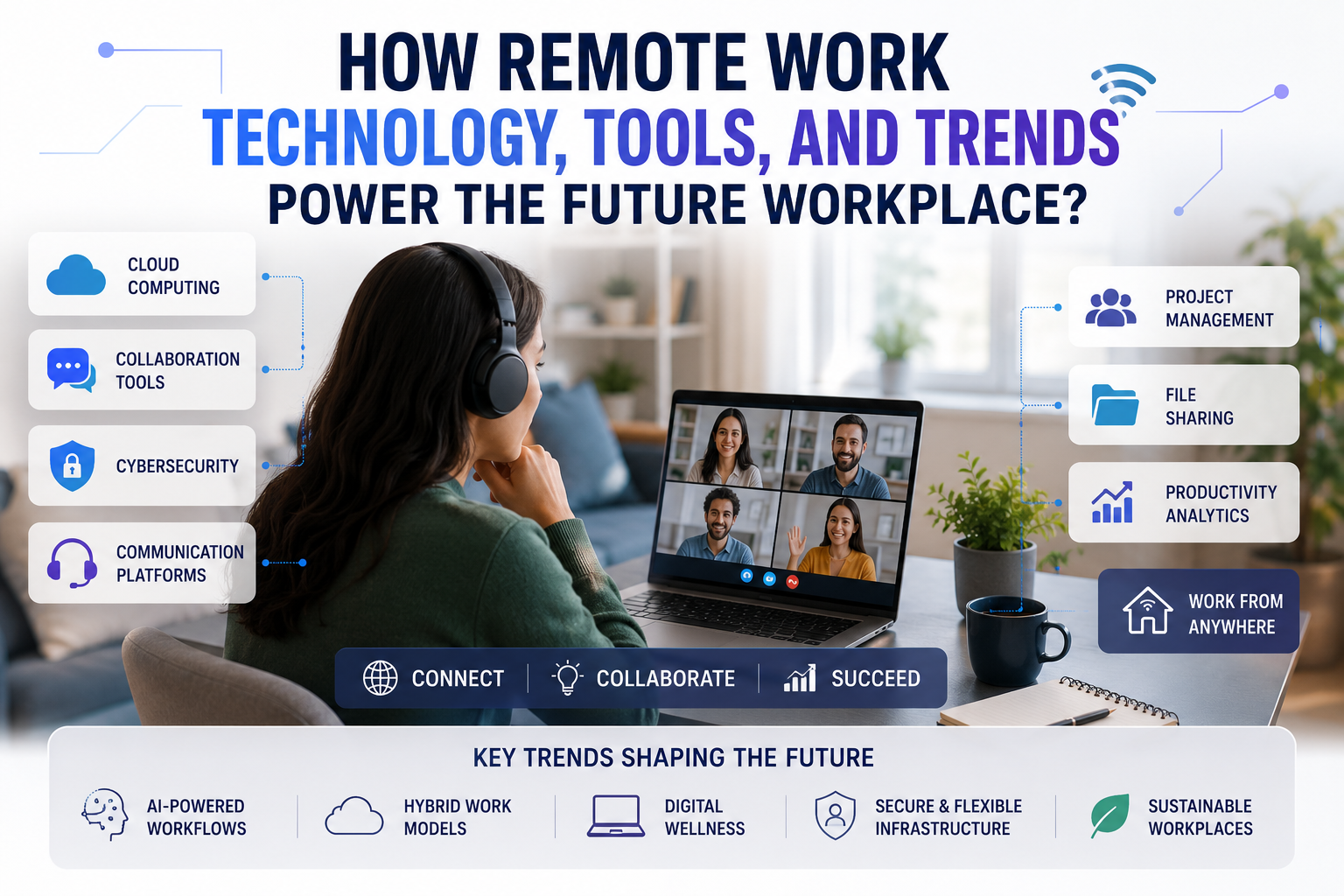

The standard office environment has experienced a lasting, seismic transition. Working from home or anywhere in the world is no more a temporary pandemic fix. It is a basic, long-term business scheme, high-powered by modern Remote Work Technology.
The Base of Virtual Collaboration:
At the core of every booming distributed team is a robust collaboration platform. These digital platforms smoothly substitute the active water cooler and the common conference room.
Advanced teams trust in a linked ecosystem of applications to keep up routine productivity.
Important collaboration platforms now include a lot of main capabilities:
- Easy communication hubs for quick messaging and high-quality video calls.
- Digital whiteboards for meaningful visual brainstorming sittings.
- Asynchronous project management trackers are planned for time zones around the world.
Wide Tech and Virtual Reality:
As remote work grows, companies are physically looking for ways to duplicate the intimacy of personal interactions. This increasing demand is where the actual wide Remote Work Technology gets integrated into the conversation.
Virtual reality (VR) and augmented reality (AR) are shifting the standard for group video calls and spatial experiences. Employees can put on an easy headset and actually feel like they are next to a colleague.
These virtual sittings are complete for onboarding fresh hires or hosting active team-building events. They effectively sort out the isolation trouble that a lot of remote workers often experience.
Cloud Base and Cybersecurity:
True tractability to work from anywhere needs a safe, easy approach to big amounts of company information. Cloud computing dishes out as the hidden, hefty engine, making this boundaryless approach conventional.
All the same, decentralizing the workforce importantly expands the risky attack surface for cyber risk. Consequently, modern security tools have rapidly turned into a mandatory, non-negotiable factor of advanced tech stacks.
To fight increasing cyber risks, business organizations are quickly adopting fresh security criteria:
- Zero-trust network workflow that endlessly tests user identities.
- End-to-end encryption for all inside file sharing and outside communications.
- Cloud-based virtual desktops that manage sensitive data completely off local hard drives.
AI and Productivity Automation:
Artificial intelligence is quickly becoming the final digital partner for shared employees. It physically removes friction from routine workflows by smart automating repetitions, time-taking administrative jobs, and improving productivity through innovative solutions like lufanest.
From automatically creating actionable meeting sums up to drafting work emails, AI tools are now invaluable. AI algorithms can still prioritize inbound texts based on an urgent basis.
The Ascend of Modern Ergonomic Hardware:
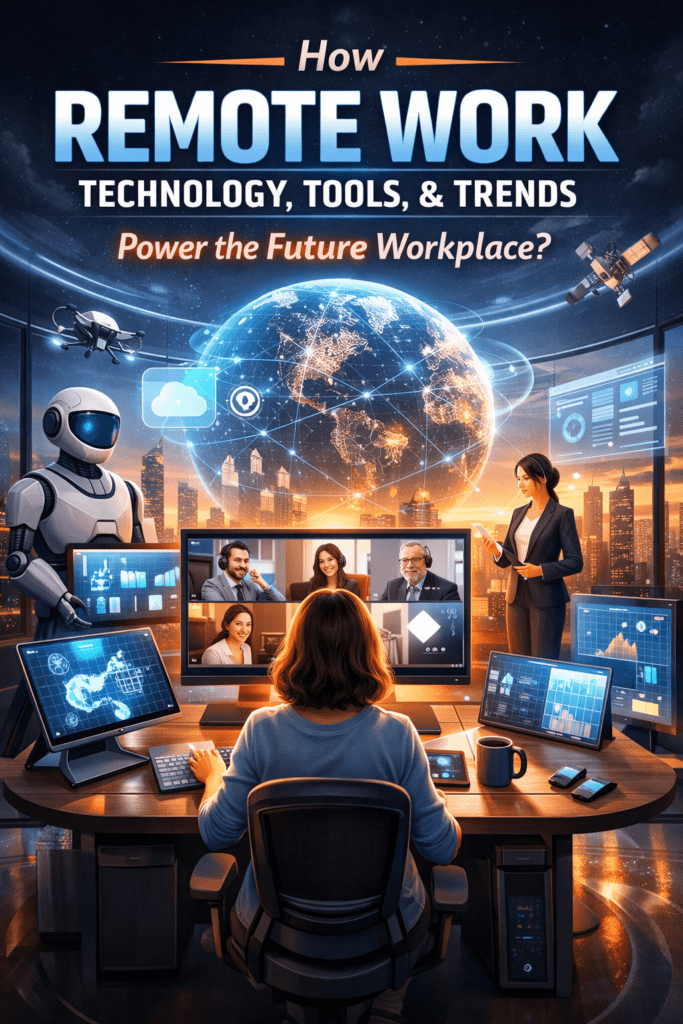
Software solely cannot embody the future workplace; active hardware must also be involved. Workers are putting in heavy hours in expert-grade setups to keep up active health during long hours at home.
Noise-canceling devices, 4K webcams, and ultrawide motion monitors are now common requirements for remote offices.
Summing Up:
The rise of the digital workplace is a current, extremely active journey. As these tools turn smarter and are more clearly incorporated, the active office will carry on to lose its standard dominance. The concentration is transferred completely from active presence to a measurable product.
By passionately adopting these rising trends, business organizations can build up incredibly resilient, brilliant teams. Finally, Remote Work Technology is not only supporting the future of work; it is actually designing it.


One Response